
Ever wonder what someone really means when they say, “I’m fine”? It might seem simple, but those two words can hide a whole world of feelings!
With 300+ witty and caring responses, you’ll never run out of clever or thoughtful ways to reply. From playful comebacks to heartfelt check-ins, there’s something for every conversation!
Understanding the Meaning Behind “I’m Fine”
When someone says “I’m fine,” it doesn’t always mean what it sounds like. The hidden meaning of “I’m fine” often depends on context, tone, and relationship dynamics. Sometimes it’s honest, but other times it’s a polite way to avoid deeper conversations.
The psychology behind “I’m fine” reveals it’s frequently used as an emotional shield. People say “I’m fine” when they don’t want to burden others or lack the energy to explain their true feelings. Recognizing the difference between genuine and guarded responses helps you respond with care.
Literal vs Hidden Meanings
- Literal meaning: Everything is genuinely okay, no issues, feeling content and balanced
- Hidden meaning: I’m struggling but don’t want to talk about it right now or share my vulnerability
- Defense mechanism: I’m fine serves as a protective barrier to avoid emotional exposure or judgment
The Psychology of Saying “I’m Fine”

The “I’m fine” psychology runs deeper than most people realize. It’s rooted in how we’re taught to manage emotions and navigate social expectations. Understanding this helps explain why “I’m fine” appears so often in conversations, even when someone clearly isn’t okay.
As a defense mechanism, “I’m fine” protects us from uncomfortable vulnerability. It creates distance between our actual feelings and what we’re willing to share with others. This emotional shortcut becomes automatic, especially when we’re not ready to open up about what’s really happening inside.
The “I’m fine vs actual feelings” gap often widens in relationships where people fear judgment or rejection. Saying “I’m fine” feels safer than admitting struggle, even though honesty might bring the support we actually need. It’s a coping strategy that trades connection for perceived safety.
Why People Default to “I’m Fine”
- Emotional defense: Saying “I’m fine” shields you from having to process or explain complex feelings in the moment
- Vulnerability avoidance: Opening up feels risky, so “I’m fine” keeps emotional walls intact and protects self-image
- Desire to appear strong: Admitting struggle conflicts with wanting to seem capable, independent, and in control
- Social norms: Society teaches us that “I’m fine” is the polite, expected response that keeps interactions smooth
When Someone Says “I’m Fine” What They Might Actually Mean
Decoding what “I’m really fine” means requires reading between the lines. The same two words can carry completely different messages depending on delivery and context. Pay attention to subtle cues like hesitation, tone shifts, or body language that reveal the truth behind “I’m fine.”
In text messages, “I’m fine” becomes even trickier to interpret without vocal tone or facial expressions. A quick “I’m fine” might signal genuine okayness, while a delayed “I’m fine…” could mean the opposite. Context and your relationship history provide important clues about hidden emotions.
Three Common Hidden Meanings
- Genuinely fine: They’re actually okay, content with life, and have no underlying issues to discuss right now
- Struggling but hiding: They’re dealing with stress, sadness, or overwhelm but using “I’m fine” as a mask to avoid burdening you
- Wants you to ask again: They’re hoping you’ll dig deeper and create a safe space for them to open up honestly
How to Respond to “I’m Fine” with Empathy
Responding empathetically to “I’m fine” means creating space without pushing too hard. The goal is showing you care while respecting their boundaries. Small, thoughtful gestures often work better than demanding they open up immediately.
Your “I’m fine” communication tips should balance curiosity with patience. Let them know the door is open whenever they’re ready to talk. Sometimes just knowing someone cares makes all the difference.
Empathetic Ways to Respond
- Gentle curiosity: “Are you sure? I’m here if you want to talk about anything at all”
- Acknowledgment: “I hear you saying you’re fine, but I sense something’s off. No pressure to share”
- Offering support: “Okay, but just know I’m always here for you whenever you need me”
- Checking in later: “I’ll check back with you later. You don’t have to go through things alone”
- Small gestures: Send a thoughtful message, share a funny meme, or simply sit with them in silence
Practical Responses You Can Use
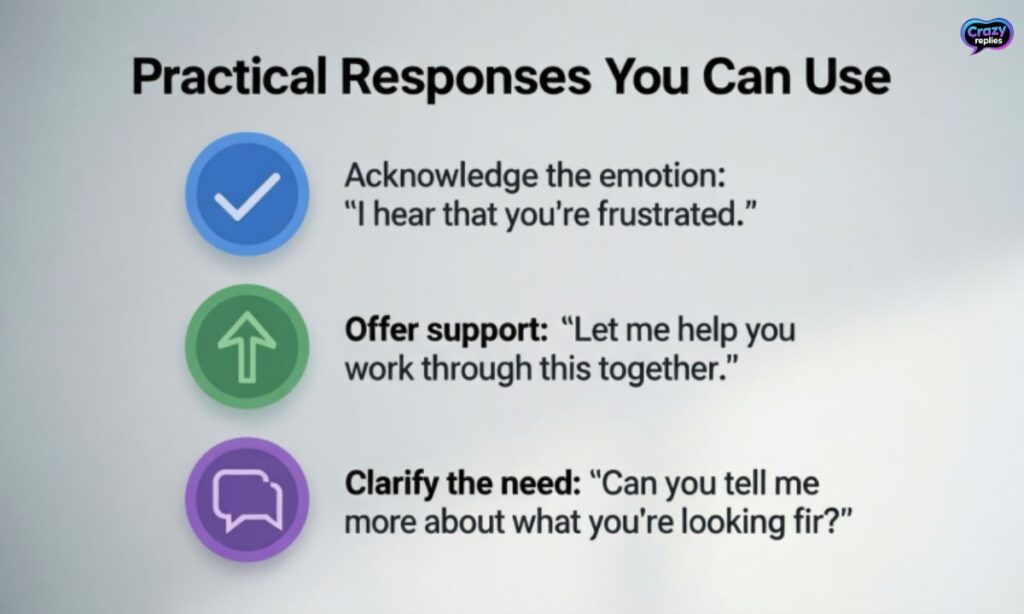
When someone hits you with “I’m fine,” having caring replies ready makes a real difference. These “I’m fine” conversation starters help you respond authentically whether you’re texting a friend, talking with coworkers, or checking in on family. Mix playful and supportive tones based on your relationship and what feels natural.
Quick Response Ideas
- “Fine as in actually fine, or fine as in ‘don’t ask’?”
- “Okay, but your ‘fine’ sounded a little sus just now”
- “I’m here whenever you want to upgrade from fine to honest”
- “That’s cool, but I’m still here if that changes”
- “Fine is such a mystery word. Want to unpack that?”
- “Sending you a hug just in case fine means not-so-fine”
- “I’ll accept that answer for now, but I’m checking back later”
- “You know you can tell me anything, right? No judgment ever”
- “Fine works for me if it works for you. But I’m one text away”
- “Translation: you’re actually fine or you need ice cream and a chat?”
- “Got it. Just remember my door’s always open when you need it”
- “I respect that, but don’t hesitate to reach out if things shift”
| Tone | Example Response |
| Casual | “Cool, but holler if you need anything later” |
| Playful | “Fine? That’s the most suspicious word in the dictionary!” |
| Caring | “I’m here for you, whether you’re fine or just pretending” |
| Supportive | “No pressure, but I’m always ready to listen when you are” |
Slang Words for “I’m Fine”
People rarely stick to formal language when expressing how they feel. Instead of “I’m fine,” you’ll hear casual alternatives that carry the same meaning but sound more relaxed and natural. These slang versions of “I’m fine” pop up constantly in text messages and everyday conversations with friends.
Common Slang Alternatives
- “I’m good” :Standard go-to that sounds chill and reassuring
- “All good” :Quick, breezy way to say everything’s under control
- “I’m chill” :Relaxed vibe suggesting zero stress or worry
- “No worries” :Dismissive but friendly, often paired with a shrug
- “I’m solid” :Confident tone implying stability and strength
- “Gucci” :Playful slang meaning everything’s great or fashionable
- “Living the dream” :Often sarcastic but sometimes genuinely positive
| Slang | Meaning | Usage Context |
| I’m good | Everything’s fine, no issues | Casual friends, texting |
| All good | Situation handled, don’t worry | Work, social settings |
| I’m chill | Relaxed, no stress | Close friends, informal |
| Gucci | Everything’s perfect/cool | Young people, playful tone |
| Living the dream | Fine (often sarcastically) | Coworkers, humorous context |
I’m Fine in Advanced English
When you want to sound more polished or professional, “I’m fine” gets upgraded with sophisticated alternatives. These phrases work perfectly in formal settings, professional emails, or when speaking with people you want to impress.
Advanced versions of “I’m fine” maintain the same message while elevating your communication style.
Formal Alternatives to “I’m Fine”
- “I’m doing well, thank you” :Polite and complete response for professional or formal contexts
- “All is well” :Elegant way to confirm everything’s in order without oversharing
- “I’m managing quite well” :Suggests competence and control over your situation
- “I’m in good spirits” :Positive tone that acknowledges emotional state professionally
- “Everything’s proceeding smoothly” :Professional reassurance often used in work or business settings
What to Reply When Someone Says “I’m Fine”
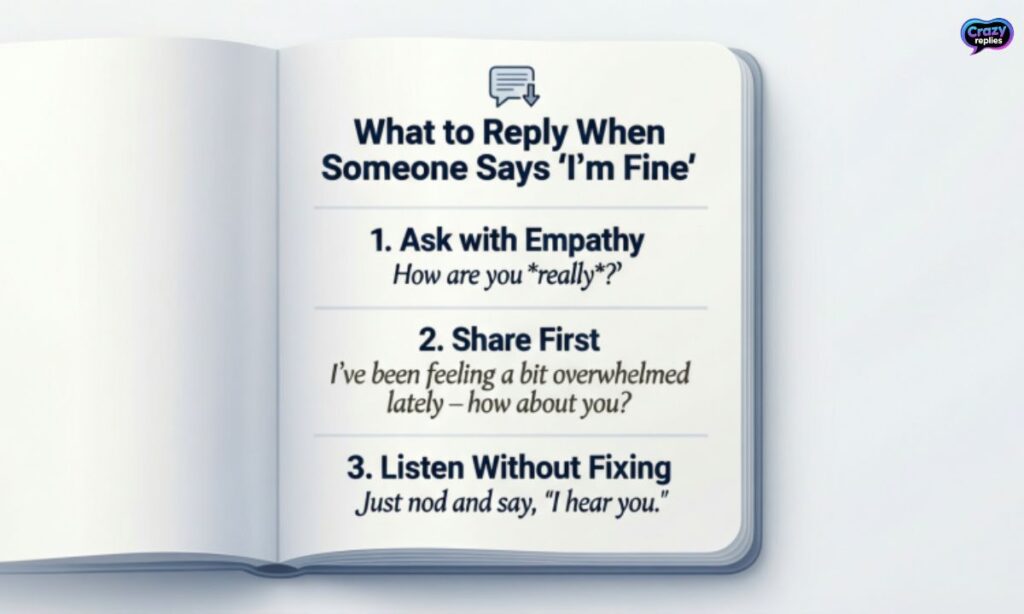
Knowing how to respond to “I’m fine” makes all the difference in building genuine connection. Your reply should invite openness without forcing it, creating a safe space where they can share more if they want. The key is balancing concern with respect for their boundaries and comfort level.
These “I’m fine” check-in phrases work across different relationships and contexts. Whether it’s “I’m fine” with friends, family, or coworkers, thoughtful questions show you’re paying attention. Choose responses that match your relationship dynamics and the situation at hand.
Effective Replies and Follow-Up Questions
- “Are you really fine, or just fine for now?” :Gently challenges the automatic response
- “Want to talk about it, or should I just send good vibes?” :Gives them control over the conversation
- “I’m sensing there’s more to that ‘fine.’ Am I wrong?” :Shows you’re reading between the lines
- “No pressure, but I’m here if you need to vent or just chill” :Removes obligation while offering support
- “What would make today better for you?” :Shifts focus to solutions and care
- “Fine as in good-fine or fine as in barely-holding-it-together-fine?” :Adds humor while creating opening
- “Okay, but check in with me later if that changes” :Keeps door open for future conversation
- “I care about you, so I had to ask. Let me know if you need anything” :Direct expression of concern
Common Mistakes to Avoid When Responding to “I’m Fine”
Even with good intentions, your response to “I’m fine” can backfire if you’re not careful. These common missteps can shut down communication instead of opening it up. Being aware of what not to do helps you navigate “I’m fine” conversations with better emotional intelligence and sensitivity.
What Not to Do
- Pushing too hard: Demanding they open up immediately when they say “I’m fine” creates pressure and defensiveness
- Being dismissive: Accepting “I’m fine” at face value without reading subtle cues can make them feel unseen
- Making it about yourself: Responding with your own problems when someone says “I’m fine” shifts focus away from them
- Ignoring tone of voice: Missing the difference between a cheerful “I’m fine” and a flat one leads to misunderstanding
- Wrong timing: Pressing for details in public or inappropriate moments makes “I’m fine” even more protective
Text and Chat Replies for “I’m Fine”
When “I’m fine” appears in text messages, you lose the advantage of reading facial expressions and body language. That’s why your text reply needs extra care and thoughtfulness to bridge the emotional gap.
These “I’m fine” text reply ideas help you show genuine concern through screens while keeping the conversation natural and open.
Text-Friendly Responses
- “Okay but your energy feels off. You sure you’re good?” :Acknowledges what you’re sensing digitally
- “I’ll take that for now, but I’m one message away if you need me 💙” :Warm and available
- “Fine fine or fine? There’s a difference 😅” :Playful way to invite honesty
- “Sending you a virtual hug just in case 🤗” :Simple gesture of care
- “Got it. But seriously, my DMs are open 24/7” :Clear availability without pressure
- “Translation needed: actually fine or pretending-to-be-fine?” :Humor with genuine curiosity
- “Alright, but I’m checking back in later because I care about you” :Shows follow-through intention
- “No judgment zone here whenever you’re ready to talk” :Creates psychological safety
- “K, but if fine turns into not-fine, hit me up immediately” :Gives permission to change their answer
- “Roger that. Coffee date soon to make sure you’re really fine? ☕” :Offers real-world connection
| Type of Chat | Suggested Reply |
| Close friend texting | “Babe, your ‘fine’ doesn’t convince me. Spill it 💕” |
| Family member | “Love you. Here if you need anything, okay?” |
| Coworker/professional | “Understood. Let me know if I can support you in any way” |
| Casual acquaintance | “Cool! But reach out if you ever need to chat” |
Funny and Witty Ways to Respond to “I’m Fine”
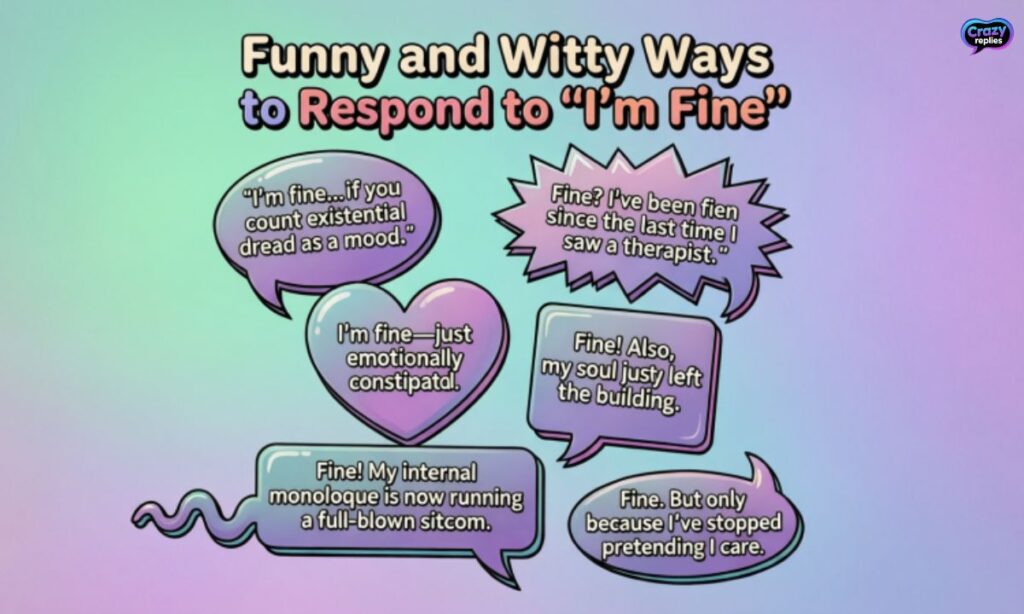
Sometimes humor is the best way to crack through the “I’m fine” shield without making things heavy. These witty responses to “I’m fine” add lightness while still showing you care enough to dig deeper. Funny answers work especially well with close friends who appreciate your playful side and sarcasm.
Hilarious Comebacks
- “Fine? That’s the most suspicious word since ‘nothing’ in a relationship!”
- “I’m fine is just ‘HELP ME’ in secret code, right?”
- “Oh, so we’re lying today? Cool, I’m a billionaire astronaut”
- “Fine stands for Freaked out, Insecure, Neurotic, and Emotional. Which one?”
- “Your ‘fine’ has more red flags than a bullfighting arena”
- “Translation: you’re one minor inconvenience away from a breakdown?”
- “Fine? Okay, but I’m adding you to my emotional wellness watchlist”
- “That’s the same ‘fine’ the Titanic captain said, and we know how that ended”
- “I’ll accept ‘fine’ only if you can say it three times without your eye twitching”
- “Fine is the adult version of ‘whatever’ and just as believable”
- “Sure, and I’m fine too… Fine-ally losing my patience with that answer!”
- “I’m calling your bluff. Nobody’s that fine on a Monday”
Final Words
Understanding someone’s “I’m fine” can be tricky. These 300+ responses make it easier and more fun.
You can use them to show care, make someone smile, or keep the chat light. Every response helps you connect better.
Frequently Asked Questions
What does “I’m Fine” really mean?
It usually means everything is okay, but sometimes it hides true feelings.
How should I respond when someone says “I’m Fine”?
You can reply with care, curiosity, or a playful comment to keep the conversation going.
Why do people say “I’m Fine” even when they are not?
It’s often a polite way to avoid sharing struggles or showing vulnerability.
What are funny ways to reply to “I’m Fine”?
Try witty or playful answers like, “Fine like a five-star pizza?” to make them smile.
Can “I’m Fine” mean someone wants me to ask again?
Yes! Sometimes it’s a subtle way to see if you really care.
How can I tell if “I’m Fine” is really true?
Look at tone, body language, and hesitation hese often reveal what words don’t.
What are caring responses to “I’m Fine”?
You can say, “I’m here if you need to talk” or “Want to share more?” to show support.

Nate Wilder has 4 years of experience crafting witty, smart replies and writing about relationships. At CrazyReplies.com, he shares fun, clever, and heartwarming responses that make conversations more interesting and connections stronger.